Essential Emergency Items for Motorcycle Riders
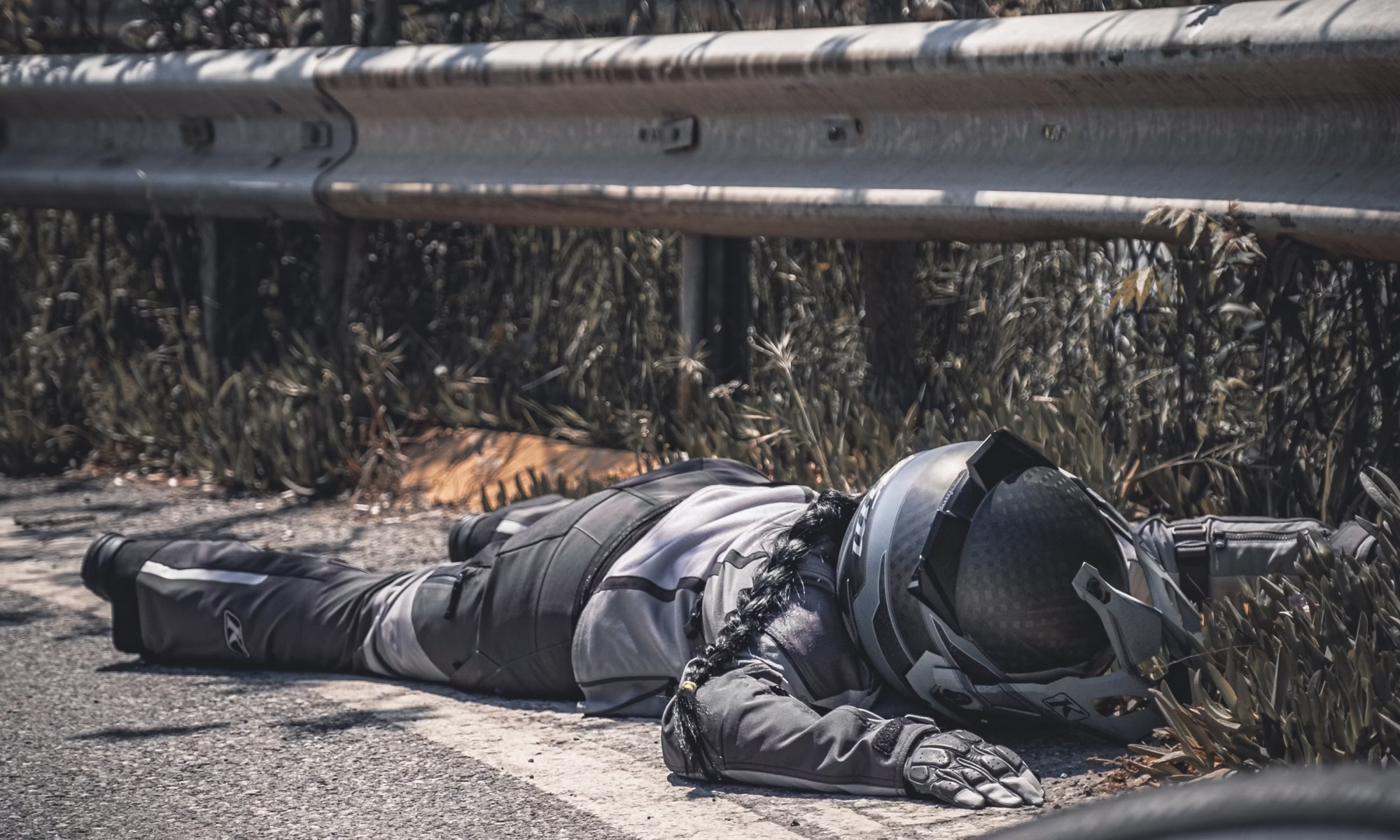
Motorcycling—especially riding solo—offers unmatched freedom. The wind in your face, the road unfurling ahead, and the sense of total independence are what pull so many of us onto two wheels. But riding alone comes with higher stakes. When you’re miles from civilization, in a place where your phone has no signal and help is hours away, the smallest incident can escalate into a life-threatening situation.
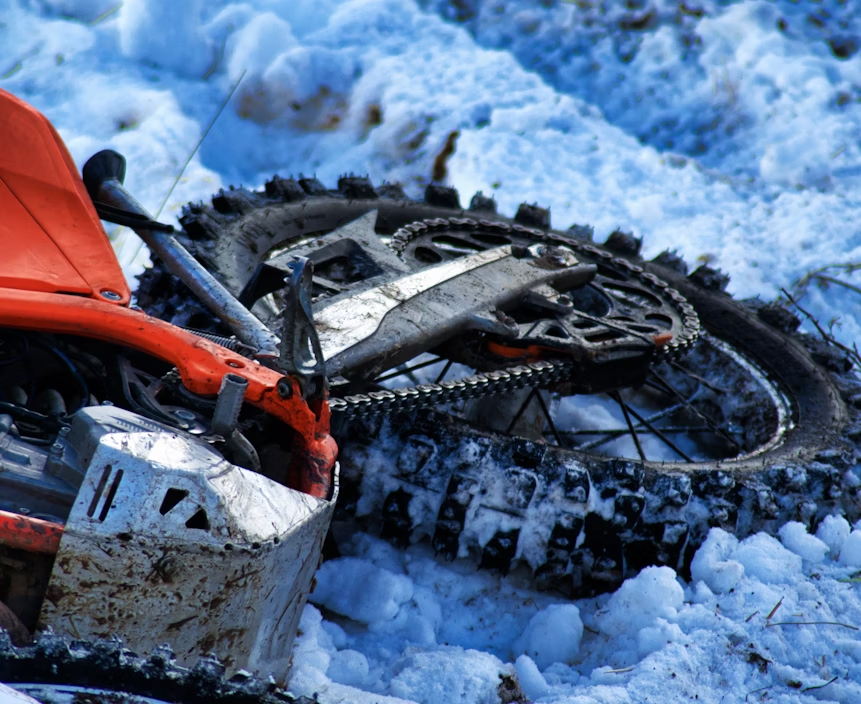
In too many accidents, riders survive the initial crash but suffer fatal consequences because they weren’t found in time or lacked the gear to help themselves. Often, it’s not speed or recklessness that costs lives—it’s unpreparedness. Some riders spend thousands on motorcycles and high-end riding gear, yet never carry even the most basic first-aid kit. It’s not about being “paranoid” or “sissy.” It’s about having the ability to save your life—or someone else’s—when the unthinkable happens.
I’ve learned this the hard way. I’ve ridden solo across countless miles, from remote mountain passes to endless desert roads, and my first-aid kit has saved me twice—once on a long-distance ride and once on what was supposed to be a casual breakfast run. Now, no matter how short the trip, my emergency gear is packed and ready before my helmet even goes on.
Below is a comprehensive guide to the essential emergency items for solo motorcycle riders, updated with real-world experience and practical tips. This list covers everything from first-aid essentials to communication devices, visibility gear, and survival tools—because out there, every second and every piece of equipment matters.
Before you read further do visit our gear finder tool to help you find the right gear – https://goodgearhub.com/gear-finder-tool/
1. First-Aid Kit – Your First Line of Defense
If there’s one thing you never leave home without, it’s a fully equipped motorcycle first-aid kit. A proper kit isn’t just about patching up a scraped knee; it’s about being able to manage serious injuries until professional help arrives.
Core essentials include:
Sterile bandages & gauze: For cuts, scrapes, and wound coverage.
Antiseptic wipes & ointments: Prevents infection in open wounds.
Pain relievers & anti-inflammatory medication: For pain management during long rides or after a fall.
Burn gel & blister pads: Crucial on hot-weather rides or long-distance touring.
Trauma shears & tweezers: For cutting clothing away from injuries or removing debris.
CPR mask & tourniquet: For life-threatening emergencies.
Duct tape & super glue: Field-expedient repairs—sometimes on gear, sometimes on wounds in extreme cases.
Pro Tip: Keep your first-aid kit in a waterproof MOLLE pouch. Attach it to your bike or wear it on your jacket so it’s always within reach. Storing it deep in luggage makes it useless when seconds count.
For long rides in gravel-heavy or remote terrain, carry an additional wound closure kit. If riding at high altitudes, consider bringing AMS (Acute Mountain Sickness) medication and portable oxygen.
2. Be Visible – Stay Seen, Stay Safe
Visibility is your best passive defense against being overlooked—whether you’re riding or lying injured on the roadside. Even in broad daylight, low visibility due to weather, terrain, or inattentive drivers can be deadly.
Key visibility tools:
Hi-Vis Over-Jacket: Lightweight, thin, and easy to wear over any riding jacket.
Helmet & Luggage Lights: Clip-on or adhesive LED lights that improve visibility in rain, fog, or low light.
I’ve had visibility gear save the day more than once—like the time I rode into an unexpected wall of fog in the middle of the desert at 11 a.m. Without my helmet and tail lights, the group riding behind me would have lost sight of me entirely.
3. SOS Satellite Communicator – Call for Help Anywhere
When you ride into the wilderness, your cell phone is only as good as the nearest cell tower—which might be hundreds of kilometers away. An SOS satellite communicator ensures that no matter where you are, you can summon help.
Why it’s essential:
Works without cell service.
Sends GPS coordinates to emergency services.
Allows two-way communication in most models.
Whether you choose a compact model for minimal weight or a full-featured unit with tracking and messaging, the key is to test it before your trip and make sure your emergency contacts know how to use it.
Extra Safety Protocol: On every GoodGearHub group ride, riders share their live location via messaging apps with hourly check-ins. If a rider misses a check-in, someone calls them immediately. This simple habit has prevented potentially serious situations.
And remember—carry two 10,000mAh power banks so you can keep your phone and satellite communicator alive for days if needed.
4. Backup Phone – Because One Is Never Enough
Phones break. They get lost. Batteries die. That’s why a rugged, backup phone is non-negotiable for solo riders.
Backup phone must-haves:
Works with multiple network bands.
Durable, water-resistant, and drop-resistant.
Long battery life—preferably days on standby.
Pro Tip: Use a SIM card from a different provider than your main phone. If one network fails, the other might still have coverage. Post-paid plans also tend to have better connectivity in remote areas than prepaid.
5. Emergency Alarm – Be Heard from Miles Away
If you’re trapped under the bike, injured in tall grass, or hidden from the road, a personal safety alarm can make the difference between being found and being forgotten.
Look for:
At least 130dB output (louder than a jackhammer).
Compact and clip-on design.
Models with integrated strobe lights for night signaling.
Pro Tip: Attach the alarm to your jacket zipper or backpack strap for instant access.
6. Hand-Crank Emergency Radio & Flashlight – Power, Light, and Information
A self-powered emergency radio keeps you informed when weather turns nasty or disasters strike. Many models double as a flashlight and a power bank—critical features for riders stranded overnight or during storms.
Features to prioritize:
Hand-crank and solar charging.
NOAA weather alert function (for storm-prone regions).
USB output for charging phones or devices.
Pro Tip: Even if your region rarely has extreme weather, an emergency radio with a high-output flashlight is invaluable when stranded in the dark.
7. Multi-Tool – The Swiss Army Knife of Survival
A multi-tool is small enough to carry anywhere yet versatile enough to handle dozens of tasks. From tightening a loose mirror to cutting a zip-tie in a roadside repair, it’s one of the most-used items in my kit.
Functions worth having:
Knife blade.
Pliers.
Screwdrivers.
Wire cutters.
Bottle opener (yes, sometimes that’s an emergency).
Essential Emergency Items for Motorcycle Riders – More Than Just “Being Prepared”
Motorcycling is unforgiving to complacency. Even the most skilled riders can’t control the weather, road hazards, or mechanical failure. But you can control how ready you are to deal with those situations.
I ride with three MOLLE pouches—each containing life-saving gear—and they’ve been used more for helping other riders than for myself. It’s not just about personal safety; it’s about being an asset to your fellow riders and your community.
Carrying these items is a responsibility—to yourself, your loved ones, and to motorcycling as a whole. Because out there, you may be the only first responder for miles.
Essential Emergency Items for Motorcycle Riders – Checklist for Solo Riders
First-Aid Kit: Treat injuries on the spot.
Hi-Vis Gear: Be seen in all conditions.
SOS Satellite Communicator: Call for help anywhere.
Backup Phone: Stay connected when your primary fails.
Emergency Alarm: Attract attention fast.
Hand-Crank Radio & Flashlight: Light, power, and weather alerts.
Multi-Tool: Solve problems on the go.
Essential Emergency Items for Motorcycle Riders – goodgearwrapup
Adventure is about pushing boundaries, but preparation is what lets you push them safely. Pack your emergency essentials, check them before every ride, and never let overconfidence take the place of readiness. Ride prepared, ride safe, because the road can change in a heartbeat. Gear up for the unexpected, not just the planned, and remember that every tool you carry is a chance to save a life. Your readiness protects not only you but also those you ride with, turning potential disasters into stories of survival. The right emergency gear means you’re never helpless, no matter where the journey takes you. In the end, coming home matters more than the miles you cover, and preparation is the key to making that happen.
Trusted Gear Links
USA
https://imp.i104546.net/c/6525840/835082/11256
EU/UK
https://www.sportsbikeshop.co.uk
https://www.championhelmets.com
SPECIALIST GEAR SITES
https://www.lonerider-motorcycle.com