Transfăgărășan Highway – Romania’s Road to the Sky
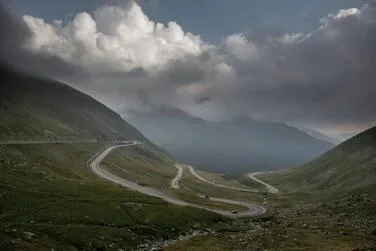
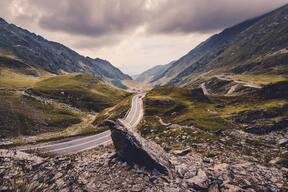
Some roads feel designed for necessity; others feel designed for art. Then there’s Romania’s Transfăgărășan Highway (DN7C) — a ribbon of asphalt that defies logic and gravity, threading through the wild Făgăraș Mountains of Transylvania.
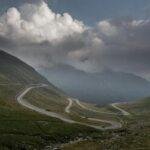
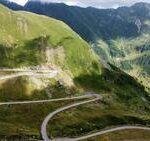
Stretching 90 km, it climbs to 2,042 meters at Bâlea Lake, carving switchbacks and hairpins that coil like dragon scales across the ridgeline. From below, it looks impossible; from the saddle, it feels like flying.
Top Gear once crowned it “the best road in the world.” For riders, it’s not just a route — it’s a pilgrimage.
Before you read further do visit our gear finder tool to help you find the right gear – https://goodgearhub.com/smart-gear-finder-tool/
Best Time to Ride
The Transfăgărășan is no all-seasons highway. Built across unforgiving peaks, it closes for most of the year.
Open Season: Late June to late October, depending on snow. Outside of these months, avalanche risk keeps the road shut.
July – August: Prime riding window, with clear skies, alpine flowers, and cafés open along the way. But it’s also when tourists flood in.
September – early October: The golden season. Autumn colors set the slopes ablaze, and the crowds thin. Cold mornings at altitude are a fair trade.
👉 Always check official Romanian road authority updates before heading out — closures can happen suddenly.
Route Highlights
Though just 90 km, the Transfăgărășan feels like an odyssey.
Southern Ascent (Curtea de Argeș to Vidraru Dam)
Curtea de Argeș Monastery: A historic starting point, blending Orthodox spirituality with local legend.
Vidraru Dam: A concrete marvel, standing 166 meters tall, holding back Lake Vidraru. A surreal prelude before the mountain switchbacks.
Central Stretch (Vidraru to Bâlea Lake)
Hairpin Heaven: Endless serpentines and S-curves, a playground for throttle and brake.
Bâlea Lake (2,042 m): A glacial lake at the summit, framed by peaks. This is the Transfăgărășan’s crown.
Northern Descent (Bâlea to Cârțișoara)
Bâlea Waterfall: Cascading 60 meters, visible from the cable car.
Cârțișoara Village: The highway unwinds into quiet meadows, shepherd huts, and old-world Transylvania.
The full ride can be done in a few hours, but why rush a road this rare?
Gear Checklist
Altitude and sudden weather shifts demand careful prep.
Four-Season Jacket: With waterproofing and thermal liners.
Cold-Weather Gloves: Temperatures at the summit can be near freezing even in summer.
Fog-Resistant Visor: Mist and drizzle are frequent.
Hydration Pack: Thin mountain air dehydrates faster than you think.
Compact Tool Kit: Remote stretches mean help is far away.
Camera or GoPro: You’ll want proof you rode this road.
Detours Worth Taking
Poienari Fortress: Linked to Vlad the Impaler, perched high above the valley.
Sibiu: A medieval city north of the mountains, with cobblestones and Saxon charm.
Transalpina Road: Romania’s other legendary highway, higher and wilder than the Transfăgărășan.
Bikes That Belong Here
This isn’t a highway for raw horsepower — it’s for handling and finesse.
Adventure Bikes: BMW GS, KTM Adventure — versatile for sharp climbs and rough weather.
Sport-Tourers: Yamaha Tracer, Ducati Multistrada — agile, comfortable, built for switchbacks.
Naked/Street: Honda CB650R, Triumph Street Triple — light and nimble, perfect for carving curves.
Cruisers: Manageable, but tight hairpins test long wheelbases and heavy frames.
👉 Rule of thumb: the lighter and more agile, the better.
Food & Stays Along the Route
Part of the joy is the mountain hospitality along the way.
Cabana Bâlea Lac: Right at the summit. Cozy rooms, hearty stews, and panoramic views.
Cabana Capra: On the southern ascent, offering mountain lodge charm.
Sibiu Guesthouses: For those who end the day in the city.
Food is rustic and rich — bean soups, grilled meats, sheep’s cheese, and papanasi (fried dough with sour cream and jam). After a cold ride, it tastes like heaven.
Mistakes Riders Often Make
Ignoring the Season: Showing up in May or November only to find the road snowed shut.
Overcooking Hairpins: Sharp switchbacks demand respect. Take them steady.
Fuel Neglect: No stations on the pass itself — fill up in Curtea de Argeș or Cârțișoara.
Not Allowing Time: The ride may be short in distance, but photo stops and weather delays stretch it.
Solo vs Group Riding
Solo: Offers meditative immersion, but risk rises if weather turns.
Group: Safer, but pacing suffers in traffic-heavy sections.
👉 Sweet spot: 2–3 riders. Enough safety, plenty of flow.
Emergency Essentials
Charged phone with offline maps.
First aid kit.
Tire plug kit and portable inflator.
Insurance covering Romania and mountain rescue.
Helicopter rescue here is rare but possible — better to prevent than depend.
History & Cultural Context
The Transfăgărășan was built in the early 1970s under Nicolae Ceaușescu, Romania’s communist leader. Ostensibly for military mobility, it was in reality a massive show of power — thousands of tons of dynamite were used to blast through mountains.
Hundreds of workers died building it, earning the road its nickname: Ceaușescu’s Folly. Today, it stands as both a testament to human ambition and a playground for travelers.
Folklore & Local Culture
This is Transylvania, and no road here escapes legend. Locals tell tales of spirits roaming the forests and wolves guarding the slopes. Riders often detour to Bran Castle, marketed as “Dracula’s Castle,” though its real ties are tenuous. Still, it adds a Gothic shadow to the journey.
Village festivals in the valleys feature traditional costumes, dances, and plum brandy. If your timing is right, the Transfăgărășan becomes more than a ride — it’s an entry into Romania’s living folklore.
Extended Itinerary Ideas
The Dracula Loop: Curtea de Argeș → Transfăgărășan → Bran Castle → Brașov → back south.
Carpathian Triangle: Link the Transfăgărășan with Transalpina and Cheile Bicazului Gorge for Romania’s ultimate riding triangle.
Eastern Europe Expansion: Combine with Hungary’s Danube Bend or Bulgaria’s Shipka Pass for a cross-border ride.
Rider Anecdotes
Riders often describe the Transfăgărășan as both exhilarating and humbling. One moment you’re attacking hairpins, the next you’re stopped by sudden fog so thick you can’t see your handlebars.
A popular ritual is reaching Bâlea Lake, cutting the engine, and listening to silence broken only by wind and cowbells. Some say that moment, not the curves, is the memory that stays forever.
Wildlife and Hazards
Bears: Yes, they roam the forests. Don’t feed them, don’t linger if spotted.
Sheep & Dogs: Shepherd dogs can be aggressive. Keep throttle ready.
Sudden Fog & Rain: Visibility can drop to meters in seconds.
Photography & Rider Memories
Few roads beg for cameras like this one. From above, the switchbacks look surreal — like someone drew a child’s scribble and carved it into stone. Riders often stop at roadside lay-bys to capture the whole serpent unfurling below.
But beyond the epic shots, it’s the quiet moments: mist curling off the lake, a shepherd waving as you pass, or the silence after you cut your engine at the summit.
GoodGearHub Wrap Up
The Transfăgărășan Highway is proof that not all legendary rides need to be thousands of kilometers. At just 90 km, it offers more drama, challenge, and sheer beauty than most riders will see in a lifetime.
It’s a road of contrasts: brutal in its history, breathtaking in its scenery, and unforgettable in its ride. If you want Europe’s most cinematic highway under your tires, this is it.
Trusted Retailers
USA
https://imp.i104546.net/c/6525840/835082/11256
EU/UK
https://www.sportsbikeshop.co.uk
https://www.championhelmets.com
SPECIALIST GEAR SITES
https://gopro.com/en/in/shop/cameras
https://www.dji.com/global/products/handheld-imaging-devices#action-series
https://www.lonerider-motorcycle.com